Category: Science/Math

Enhanced Geothermal Energy and Man-Made Earthquakes

Drill down just a few miles into the earth’s crust, and the temperature will rise substantially. This heat comes from three sources: emissions from radioactive minerals, the compressive force of gravity, and to a lesser extent, solar energy absorbed at the earth’s surface. Although such energy is not truly renewable (radioactive elements do eventually decay to energy-flat states), within any reasonable estimate of mankind’s tenancy on this planet, geothermal power is essentially limitless.

There are several techniques for transducing this energy from underground heat to in-the-grid electricity. One of these, a technology called Enhanced Geothermal Systems (EGS), is currently being tested by Sausalito-based AltaRock Energy only 12 beeline miles from my home in Northern California. Continue reading “Enhanced Geothermal Energy and Man-Made Earthquakes”

Swine Flu Hype

How close are we to Armageddon?

Is the eleventh Plague upon us?

Blood, Frogs, Gnats, Death to Livestock, Pestilence, Boils, Hail, Locusts, Darkness, Slaying of the Firstborn…and now H1N1 swine flu?

Is this the return of the Spanish Flu pandemic of 1918 during which about 50 million people died?

Assess swine flu this way: according to the Center for Disease Control each year in the United States, on average, 5% to 20% of the population get the flu; more than 200,000 people are hospitalized from flu-related complications; and about 36,000 people die from flu-related causes. That’s 100 deaths each day. So far one U.S. death has been recorded from swine flu. And research indicates the H1N1 strain is no more virulent than the typical yearly flu. Continue reading “Swine Flu Hype”

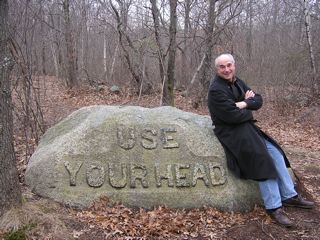
The Babson Boulders of Dogtown

In his 1905 book, The Protestant Ethic and the Spirit of Capitalism, German economist and sociologist Max Weber theorized that capitalism’s ascendancy owed much to Protestantism’s emphasis on hard work and worldly success. Whether or not Weber was actually right, the term he coined, “Protestant ethic,” has, to many, become accepted as part of our shared American definition.

Continue reading “The Babson Boulders of Dogtown”

How to Bet on the NCAA Final Four

You pays your money and you takes your chances, but the House always has an edge.

Did you ever wonder how big that edge is?

Among the simplest edges to compute is Las Vegas roulette.  If your chips are on one of the numbers from 1 to 36, and you win, you get paid 35-1. That means that if you put $1 on each of those 36 numbers, when the ball drops onto one of those numbers, you’ll get your winning bet back plus $35; you’ll break even. Those are fair odds.  But the House, as I said, always has an edge. Las Vegas wheels include two other numbers that also pay 35-1: 0 and 00. So to be sure you’ll win, you’d have to place 38 one-dollar bets, thus giving the House a $2 profit on every $38 you bet (a 5.26% margin).

Coming up this week are the NCAA basketball Final Four games, Continue reading “How to Bet on the NCAA Final Four”

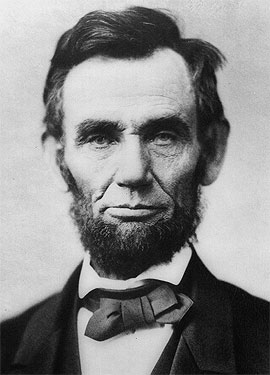
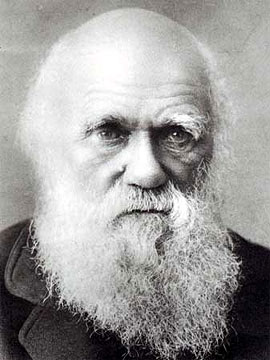
Darwin and Lincoln: 200 Years Today (or are they?)

Born 200 years ago, February 12, 1809: Charles Darwin, who changed the way we think about a human’s place in the bios, and Abraham Lincoln, who changed the way we think about a human’s place in society.

*    *    *

But perhaps these two Great Men were not born on the same day. Darwin’s birth was in a time zone five hours later than Lincoln’s. If “date of birth” is defined by calendar, then the two men were born on the same calendar day. But if Baby Abe was born later than 7 p.m. in that little log cabin near what is now Hodgenville, Kentucky, then it was already February 13 where Baby Darwin lay in Shrewsbury, England. Similarly, if Infant Charles took Breath One earlier than 5 a.m., then it was still February 11 in Kentucky. Accordingly, to be safe, I am posting this a day early.