
 “Hello. My name is Steve Cotler. Each week I go out to a ranch in the country and pick up fresh eggs and deliver them in this area at a price within a penny or two of store prices. Of course, these eggs are much fresher than store eggs because I pick them up and deliver them the same day. This week, as I finish my route—I deliver to Mrs. Jones across the street and Mrs. Brown down the block—I find that I have a few dozen left over. Since I only want to sell the freshest eggs, I’d be happy to offer them to you at half-price. Would you like to try some really fresh eggs?”
This was my pitch. I was 15.
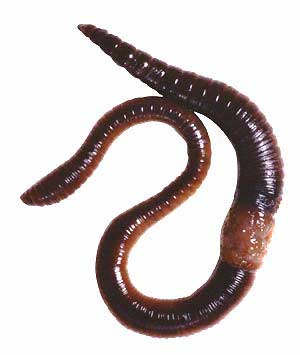 Selling eggs wasn’t my original money-making idea. I had first proposed raising and selling invertebrates, proving the concept’s viability by showing my parents a magazine ad—Big Money in Earthworms—but was immediately and unchallengeably quashed by my mother’s assertion that she’d be unable to sleep if she knew there were millions of worms slithering through cow manure and garbage in the backyard bins I proposed to build.
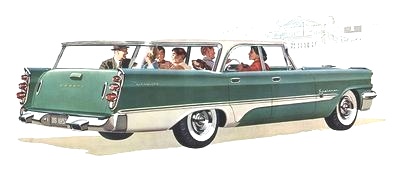
One week later, I learned that only 25 miles away was Moorpark, the center of egg production in Southern California. Once I compared the wholesale egg prices that were printed once a week in the local newspaper with the supermarket’s retail prices, I realized that the margin (22-23 cents) would yield a nice profit if I could find the customers. I called every one of my parents’ friends and in an afternoon, had orders for 65 dozen. Now I had to get the eggs. Since I did not yet have a driver’s license, my mother drove me to Moorpark, and we went from ranch to ranch until I found one willing to sell me eggs. I bought three cases (90 dozen) of extra large eggs plus a supply of cartons and hefted them into the back of our 1957 DeSoto station wagon. I had invested just under $50.
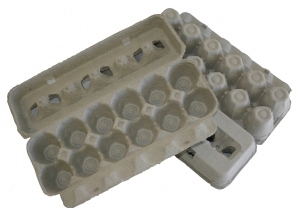 Unloaded into our garage, eggs went from case to carton by hand, with me gradually perfecting a three-eggs-in-each-hand technique that facilitated repacking with minimum wasted motion and maximum cracked eggs. This was part of my business plan; Mom had agreed to accept cracked eggs in exchange for transportation costs. I put the cartons into the back seat of the car. In two hours, Mom and I had delivered the 65 dozen and made a gross profit of over $13. I had 23 dozen left. (Readers with excellent math skills will be able to deduce how many eggs I cracked in the repacking process.)
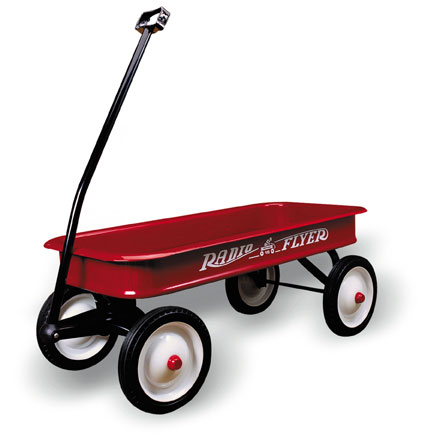 The 23 dozen went into a Radio Flyer wagon that was tethered by rope to the back of my bicycle, and I started door-to-door.
“Hello. My name is…”
(Continued in the next post)
* * * * *
In 1959, extra large eggs were 59 cents a dozen…and gas was 29.9 cents a gallon.


One Comment on “I Really Was the Eggman — Part 1”
Hi, Steve,
This is Gene from HHS, retired at last and checking in with you again. Nice site–I enjoyed reading about the Eggman. Your memory is much better than mine, but that looks like a Ford Parklane, not a DeSoto. And I thought it was Rosie Mendoza who called, “Hey, Eggman!” whenever she saw you. And wasn’t there a fight with Rosie? I also remember one morning before Mr. Morse’s class when you were recommending stocks: “Buy American Casket because people are dying all the time.” Anyway, I enjoyed reading this story about the egg route and will move on to other topics. All the best to you.
[SC responds: Well done! Gene was right. Somehow, I slipped a Ford Parklane into the post. It has now been replaced with the correct auto.
As for Rosie, I do not remember any fight…and if there was one, it surely wasn’t with me! She may have called out, “Hey, Eggman!”, but it was a couple of lads who tormented me on my route.]
Comments are closed.